Impact noise
Less noise transmitted to adjacent offices and floors.

A well-designed training space is about more than equipment. Flooring directly affects user safety, the durability of the space and the acoustic comfort of neighbouring areas. With more than 30 years of gym design experience, DNAxFIT designs and installs durable, sound-insulated, shock-absorbing gym flooring across Quebec.
Shock-absorbing gym flooring absorbs the impact of free weights, jumps and the dynamic movements used in functional training. Without that protection, every dropped weight transfers force directly to the concrete slab, accelerating surface wear and increasing risk for users. The right surface also protects the existing subfloor—especially important in corporate and commercial projects where leased or shared premises come with specific requirements.
Less noise transmitted to adjacent offices and floors.
Better protection for the slab and floor surface.
A stable surface that reduces slips and softens impacts.
Less vibration felt in neighbouring spaces.
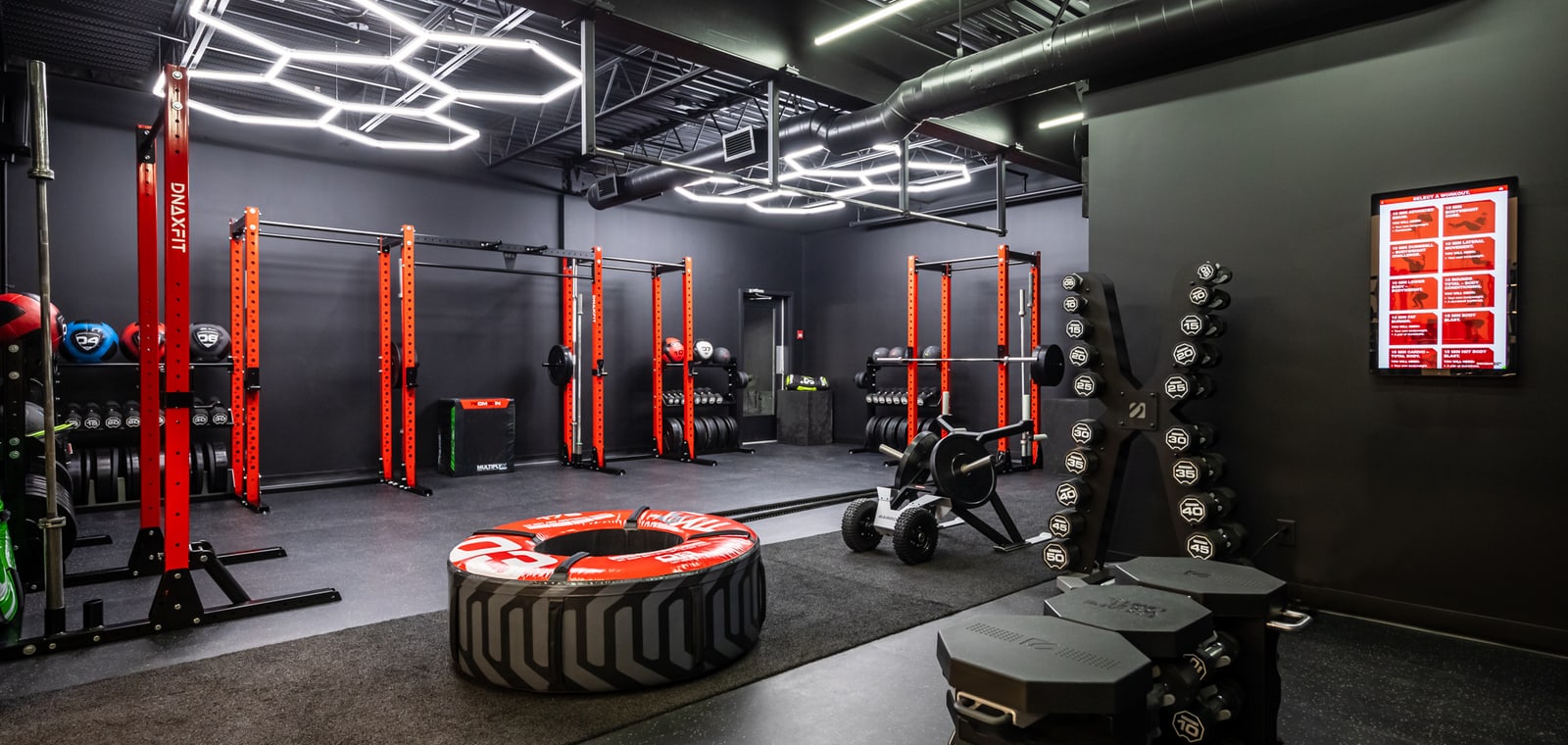
In an office building, residence or shared commercial property, gym noise can quickly become a concern for neighbouring occupants. Shock-absorbing flooring combined with proper sound insulation limits impact noise and vibration, allowing the gym to operate without disrupting the rest of the building. This matters especially for corporate gyms located near offices or meeting rooms, where acoustic comfort directly influences employee adoption of the space.
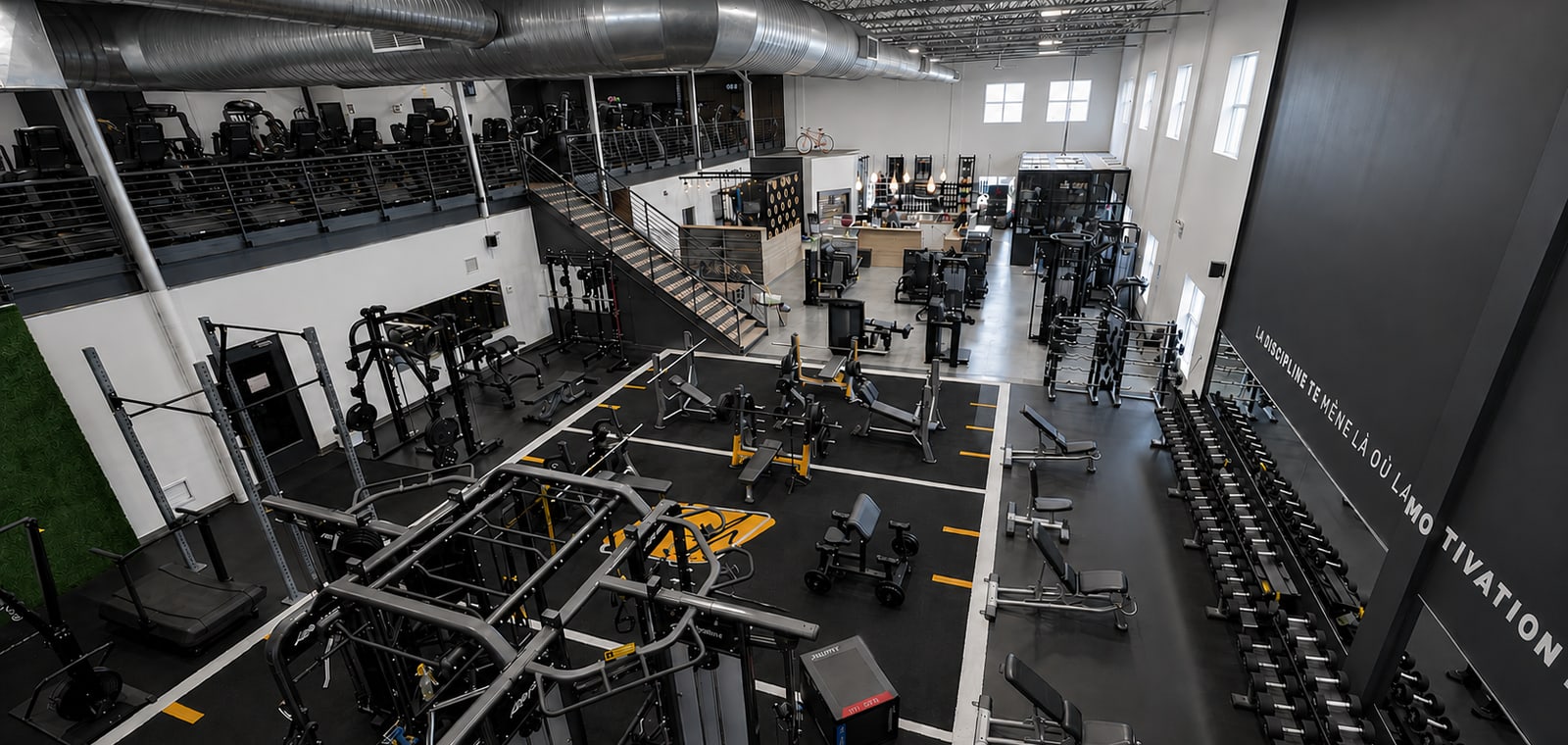
Flooring type and thickness vary according to the expected intensity of use and the type of space.
| Intended use | General recommendation |
|---|---|
| Residential, light training | Low- to medium-thickness rubber flooring |
| Free-weight strength training | Thick, high-density shock-absorbing flooring |
| Cardio and group training zone | Wear-resistant, easy-care surface |
| Corporate gym near offices | Shock-absorbing floor with a sound-insulating underlay |
Flooring selection is part of the overall project analysis, just like equipment placement. Our team, including a kinesiologist, considers the type of training, the number of users and the building constraints to recommend the right shock-absorbing gym floor, integrated directly into your 2D gym floor plan.
Want to assess the needs of your space? Request a free flooring quote.
Well-chosen shock-absorbing gym flooring protects your users, equipment and building while resolving soundproofing issues before they become a problem. It is an investment that fits naturally into a custom gym design project.
Request your free quoteThe recommended thickness depends on the intensity of use and the type of training. A free-weight area where heavy loads are placed on the floor generally requires thicker, denser shock-absorbing gym flooring than a cardio or light-training zone. Our team assesses how each part of your gym will be used to recommend the thickness best suited to your needs and budget.
Yes. Properly selected shock-absorbing gym flooring absorbs much of the impact generated by free weights and dynamic movements, significantly reducing pressure on the slab or existing subfloor. This protection extends the life of the building and helps prevent costly repairs—especially important in leased spaces or buildings shared with other tenants.
It often is, especially when the gym is located near offices, meeting rooms or shared spaces. A sound-insulating underlay limits the transmission of impact noise and vibration, allowing the gym to operate without disturbing the rest of the building. We assess this during the project analysis so the right acoustic solution is included in the training-space layout.
Absolutely. Residential gym flooring generally uses a thinner rubber surface than a commercial installation because use is less intensive. It still protects the floor from dropped weights, cardio equipment and daily wear. Our team adapts the surface to the available space and expected training, whether the gym is in a basement, garage or dedicated room.