
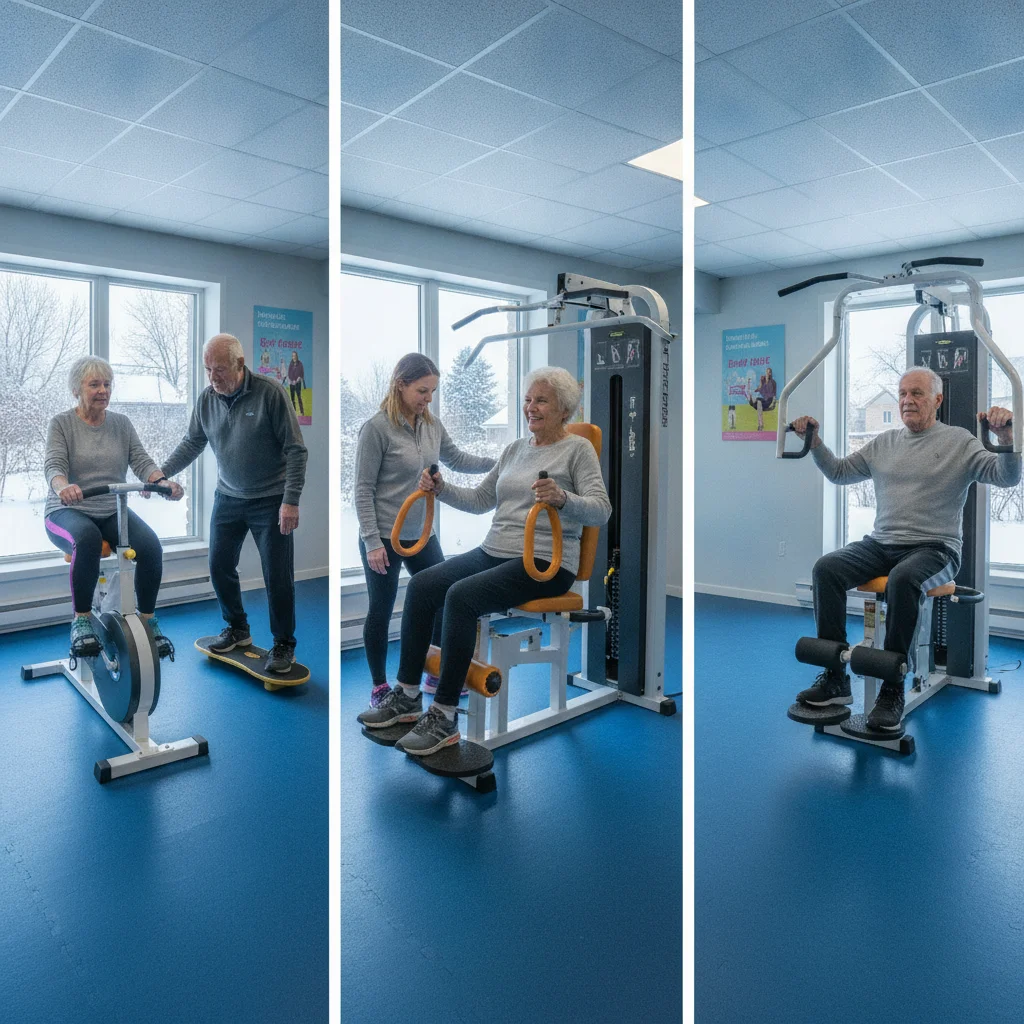
The most suitable gym equipment for older adults is generally commercial-grade, with adjustable-resistance machines, easy access and a clear focus on balance. That choice lowers the risk of falls and meets the needs of a more vulnerable clientele, a central concern for any senior living residence.
This guide outlines the equipment categories to prioritize and the safety criteria to check before you buy.
Why choose commercial gym equipment for older adults?
Choosing a commercial line rather than residential machines offers a higher level of safety for more vulnerable people in a community, including seniors. Residential equipment is generally not designed for supervised, repeated use by several residents with different abilities.
Commercial machines provide more stable mechanisms, reinforced support points and more precise adjustments, details that matter especially for people with reduced mobility or declining balance.
The difference also shows up in durability. A residential machine used by several residents every day wears out quickly, which raises the risk of a mechanical failure at the worst moment: while someone is using it. A commercial line is built for that kind of intensive, repeated use.
The higher purchase cost of a commercial line is therefore justified by a longer lifespan and by a lower risk of injury from a breakdown or an unstable movement. Financing options can also spread that investment without compromising equipment quality.
What to avoid when choosing equipment
- Machines designed only for occasional home use.
- Resistance mechanisms that are imprecise or hard to adjust.
- Seats or platforms without enough lateral support.
- Slippery surfaces around exercise stations.
What research says about physical activity for seniors
According to the Canadian 24-Hour Movement Guidelines from the Canadian Society for Exercise Physiology, adults aged 65 and over should include muscle-strengthening activities at least twice a week, along with exercises that challenge balance.
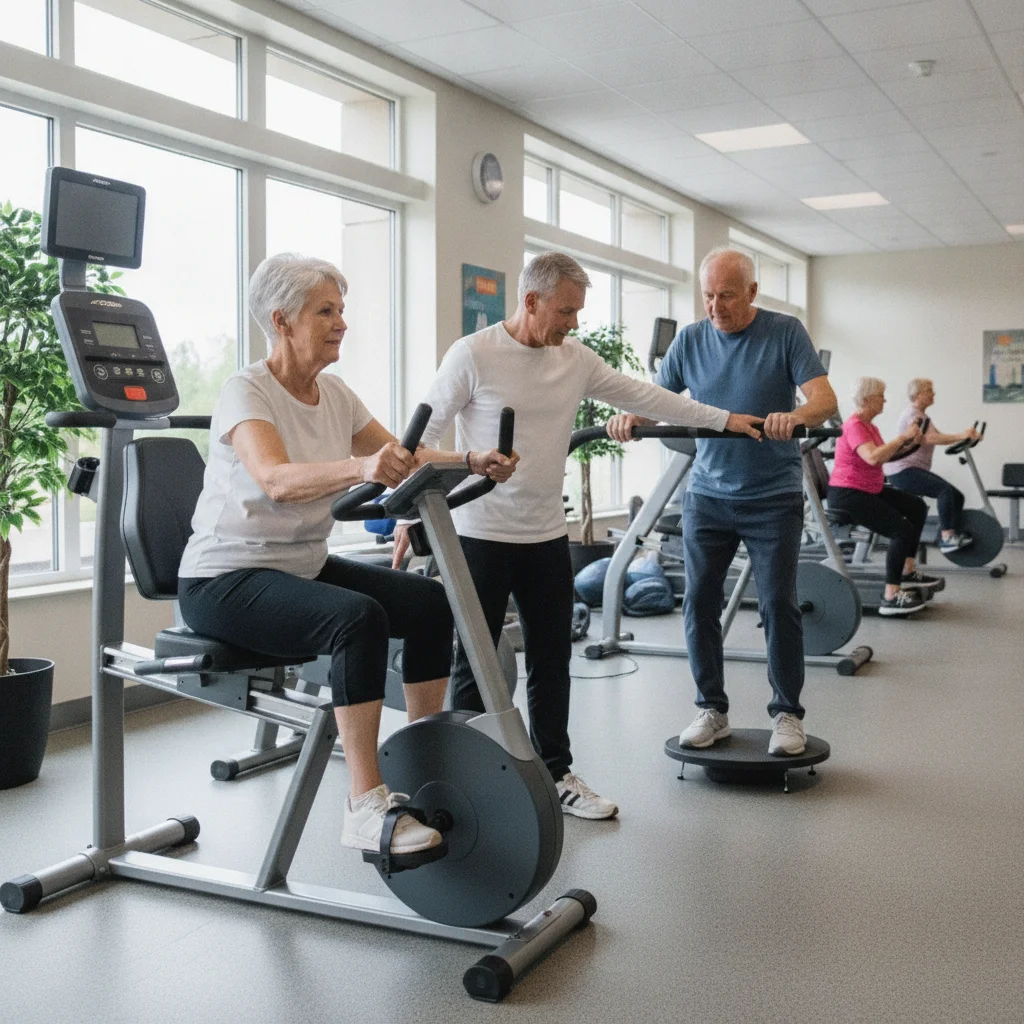
ParticipACTION notes that static and dynamic balance exercises help older adults keep their stability in daily life, whether they are walking, climbing stairs or opening a heavy door.
Well-chosen gym equipment for older adults therefore supports these recommendations directly, in a safe, supervised setting.
Maintaining muscle mass also plays a direct role in residents' functional independence. Enough strength in the legs and trunk makes everyday transfers easier, such as standing up from a chair or climbing a stair, two movements that become riskier as age-related muscle loss sets in. A structured exercise program, backed by adapted equipment, therefore helps preserve that independence for as long as possible.
Equipment categories to prioritize
Low-impact cardio machines
Recumbent bikes and low-amplitude ellipticals work the cardiovascular system without putting excessive shock on the joints, an important factor for an older clientele. A recumbent bike, in particular, offers a backrest and lumbar support that reduce the risk of losing balance while seated, unlike a traditional upright stationary bike.
Adjustable-resistance machines
Guided machines with progressive resistance strengthen muscles safely, with a controlled movement that lowers injury risk compared with free weights. Hydraulic or pneumatic resistance, gentler than a weight-stack system, is especially well suited to people who are starting or returning to regular exercise.
Balance and mobility equipment
Support bars, balance platforms and mobility accessories complete the offering and support fall prevention among residents. Some models include an adjustable front support, which allows a gradual progression as the resident's confidence and stability improve.
Equipment maintenance and lifespan
Well-maintained equipment stays safer for longer. Regular inspection of mechanisms, pads and anchor points helps catch wear before it becomes a risk for residents.
Because usage in a senior residence is generally high and continuous, a preventive maintenance schedule is often more cost-effective than an emergency repair that temporarily takes away a machine residents rely on.
Planning a staged replacement budget, rather than waiting for a machine to fail completely, also keeps the equipment offering functional and safe for every resident.
Assessing equipment for a senior residence? Get a free quote tailored to your needs.
Comparing equipment by mobility level
| Mobility level | Recommended equipment |
|---|---|
| Independent, active | Recumbent bike, resistance machines, light weights |
| Reduced mobility | Seated machines, support bars, resistance bands |
| Supervision required | Balance platforms, supervised mobility accessories |
Layout the space to maximize safety
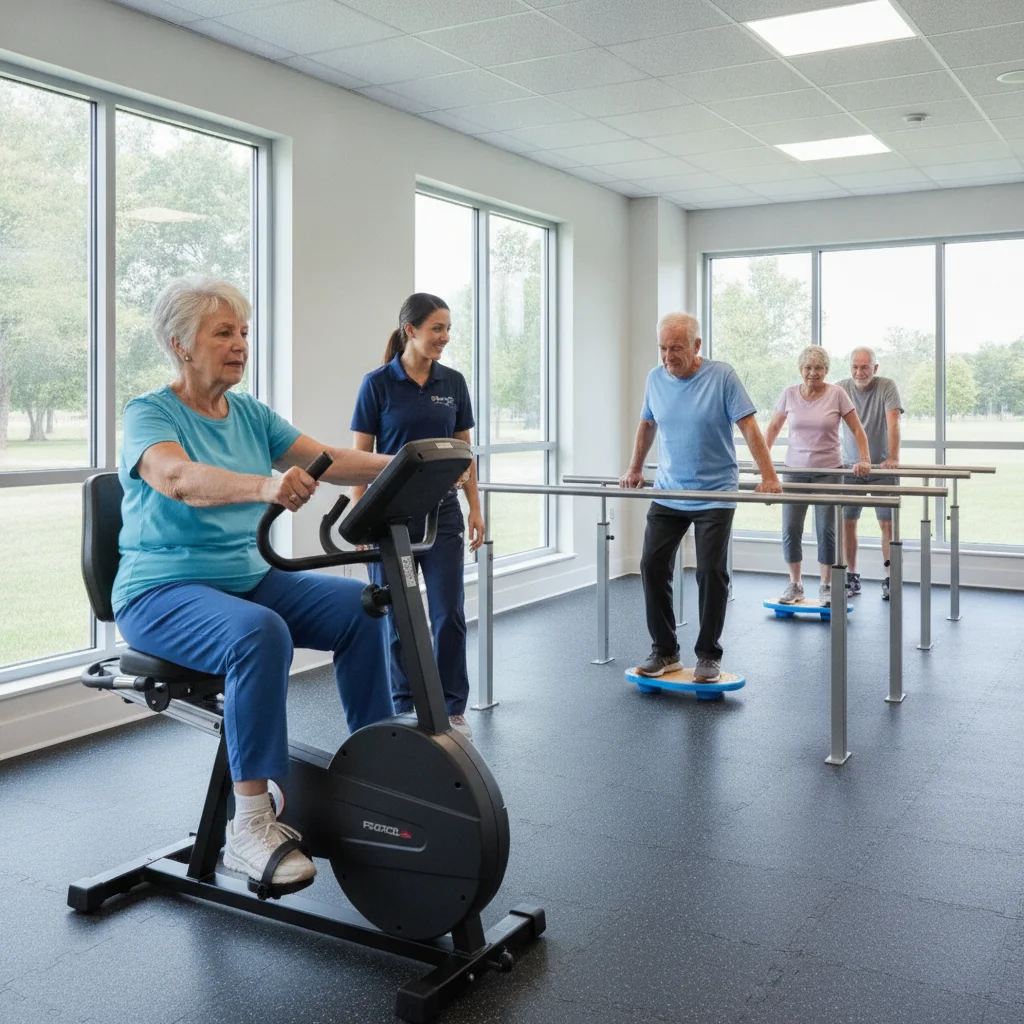
Equipment choice alone is not enough. How machines are placed in the room plays just as important a role in preventing falls and accidents. A 2D layout plan prepared before purchase lets you validate aisles and spacing before the machines are delivered.
Wide circulation aisles, with no obstacles on the floor, allow residents using a cane or walker to move freely between stations. Even lighting, without shadows near the machines, also helps people see surfaces and controls.
Spacing between each machine should allow a staff member to accompany a resident without feeling cramped, a detail often overlooked when a senior-residence gym is first planned. A non-slip shock-absorbing floor completes that layout by reducing the risk of slips around exercise stations.
Safety criteria to check before buying
- Machine stability and reinforced support points.
- Easy entry and exit from the seat or station.
- Simple adjustments, without complex handling.
- A non-slip surface around each machine.
- A commercial line rather than residential equipment.
A well-designed senior residence installation accounts for each of these criteria from the first space-planning stage.
Support from a kinesiologist also helps adapt the layout to residents' actual abilities, an approach that strengthens the overall safety of the training space.
Choosing the right gym equipment for older adults
Choosing the most suitable gym equipment for older adults rests on a robust commercial line, low-impact machines and a clear focus on balance and fall prevention. A well-planned senior residence installation takes that into account from the start. Get a free quote to assess your project.