
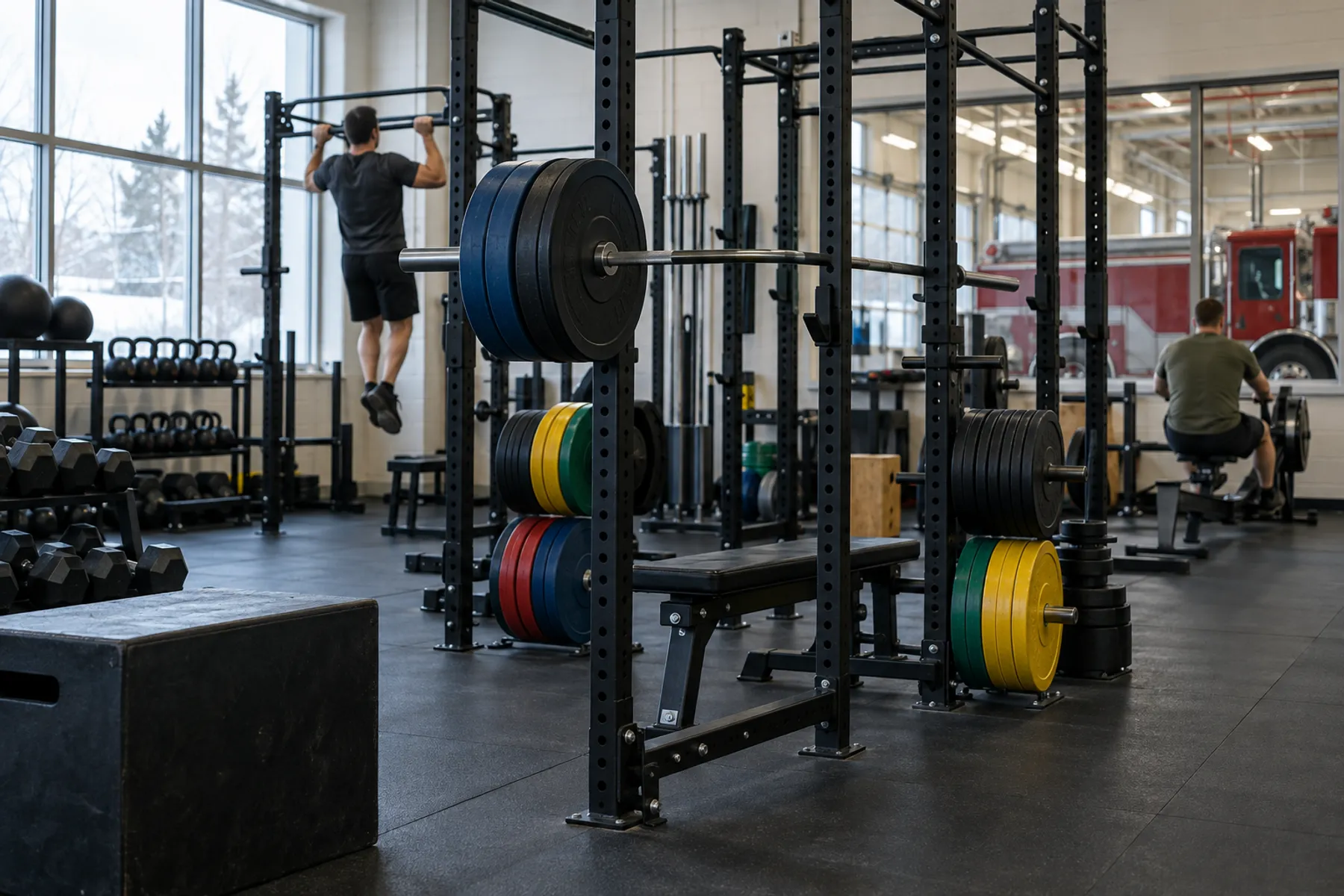
Climbing stairs with a hose on your shoulders, dragging an 80 kg victim and swinging a sledgehammer while wearing about 25 kg of protective equipment are no easy tasks. Yet these tasks are part of some hiring tests in Quebec, and they explain why gym equipment for firefighters is not chosen the same way as equipment for an office gym.
For a fire department or a first responder team, the station's training room is a work tool. It must prepare the body for intense, unpredictable and repeated efforts, while withstanding round-the-clock use by rotating crews.
This guide covers the physical demands of the job, the equipment zones to plan for, configurations based on available space and financing options for municipalities.
Why firefighter gym equipment must reflect the field
An effective fire station gym meets the needs of the job's real tasks. The closer training comes to those tasks, the better it prepares crew members for emergency calls.
High and varied physical demands
The City of Montreal's firefighter employment physical fitness test (in French) gives a good overview. It includes a progressive shuttle run, followed by a circuit of nine tasks to be completed in 11 minutes or less, while wearing gear weighing about 25 kg.
These tasks include a simulated stair climb with 15.24 m of hose on the shoulders, carrying an 80 kg mannequin over 24.4 m, strikes with a 4.5 kg sledgehammer and handling a 7.3 m portable ladder. A fire station gym must therefore develop strength, cardiovascular endurance, core stability and the ability to carry or drag loads.
Cardiovascular health at the heart of prevention
The stakes go beyond performance. According to the National Fire Protection Association, 30 of the 62 on-duty firefighter deaths in the United States in 2024 were caused by heart attacks, the leading medical cause of death.
These American figures are a reminder that a regular training program, accessible during shifts, is part of prevention. The Wellness-Fitness Initiative of the International Association of Fire Fighters (IAFF) and the International Association of Fire Chiefs (IAFC) also recommends allowing training during work hours, in facilities provided by the employer.
The essential zones of a fire station gym
In an emergency service, a well-equipped gym is organized into zones, each tied to a specific capacity. This approach also makes it easier for a kinesiologist to write training programs.
- Functional strength: multi-purpose rack, barbell, plates, hex bar and adjustable bench for deadlifts, squats and presses.
- Cardio conditioning: rower, air bike, stair climber and commercial treadmill for endurance and recovery between efforts.
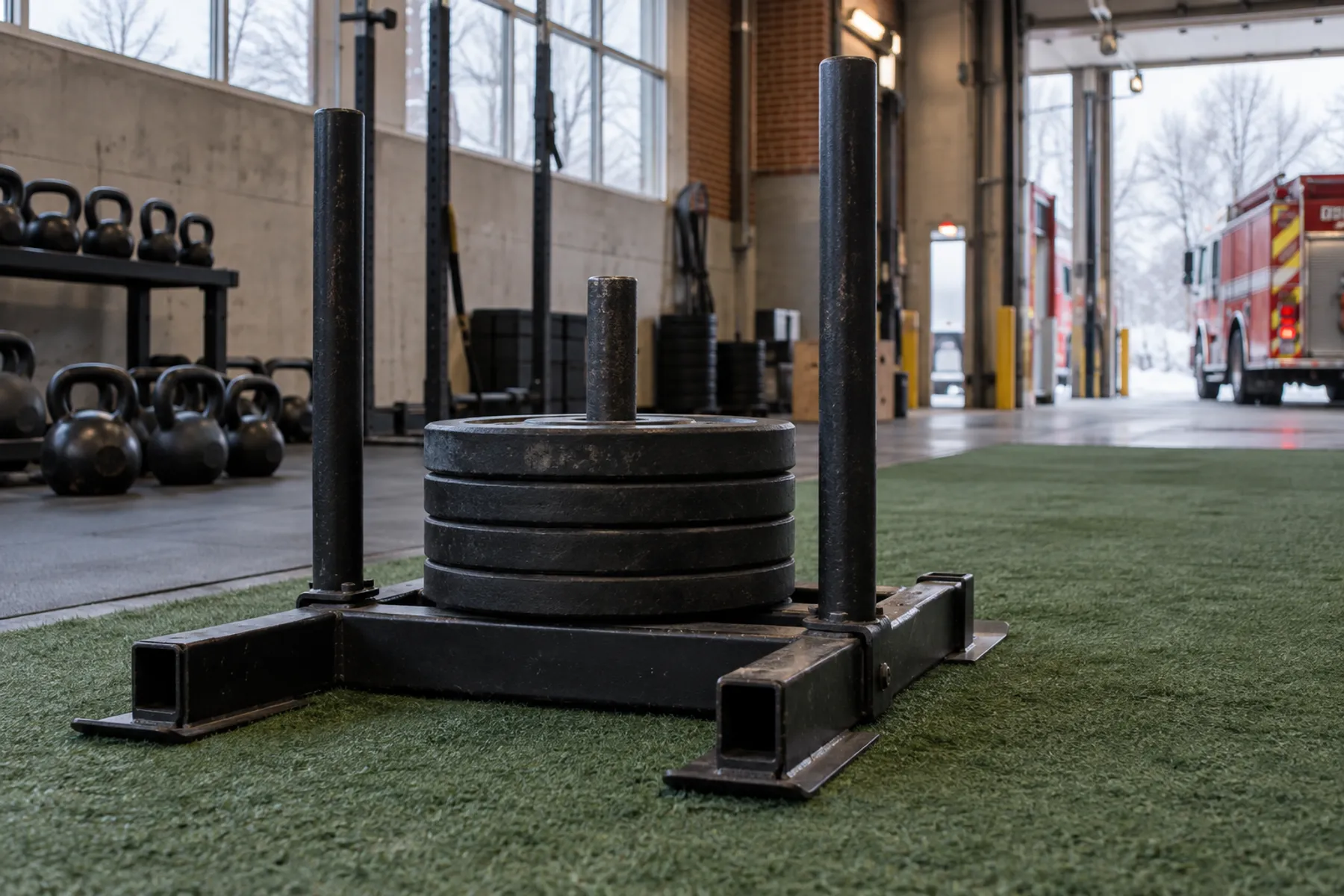
- Task simulation: push sled, sandbags, kettlebells and battle ropes to replicate carrying, dragging and repeated efforts.
- Mobility and recovery: mats, foam rollers and resistance bands to maintain range of motion and prevent injuries.
The stair climber deserves a special mention. It directly replicates climbing stairs during an emergency call, one of the most demanding tasks from a cardiovascular standpoint.
The specific needs of first responders
First responders lift stretchers, move patients and often work in awkward postures. For them, training the core, the posterior chain and grip strength, for example with loaded carries or pulls, plays an important role in the program.
Planning the training room for your fire station? An analysis of the space and the team's needs, validated by a kinesiologist, helps target the equipment that is truly useful. Request a free quote.
Adapting the layout to the space available in the station
Not all fire stations offer the same amount of space. Some have a former meeting room, others a corner of the apparatus bay or a mezzanine. The configuration must therefore adapt to the actual floor area.
| Available space | Priority equipment | Key consideration |
|---|---|---|
| Limited, under 500 sq. ft. | Multi-station, compact heavy free weights, one cardio machine | Choose versatile machines with a small footprint |
| Medium | Multi-purpose rack, reduced cardio zone, free weights, space for the sled | Plan a clear lane for pushing exercises |
| Large | Complete functional zone, cardio, strength and multi-station | Define zones so several crews can train at the same time |
In small spaces, a multi-station is often the best option. It combines several exercises on a single compact machine.
A 2D floor plan helps validate traffic flow, clearances around the rack and the space needed for the sled before purchasing. The 2D gym floor plan guide explains how this step avoids costly changes.
Durability, hygiene and round-the-clock use
Intensive use, day and night
In a full-time fire station, the room is used by several crews at all hours. Equipment must be designed for intensive commercial use, with sturdy steel frames and access to replacement parts for several years.
Flooring also plays a key role. Thick, high-density shock-absorbing flooring protects the slab when heavy loads are dropped and limits noise transmitted to dormitories or offices. The page on shock-absorbing gym flooring and soundproofing details the options based on intensity of use.
A space that is easy to disinfect
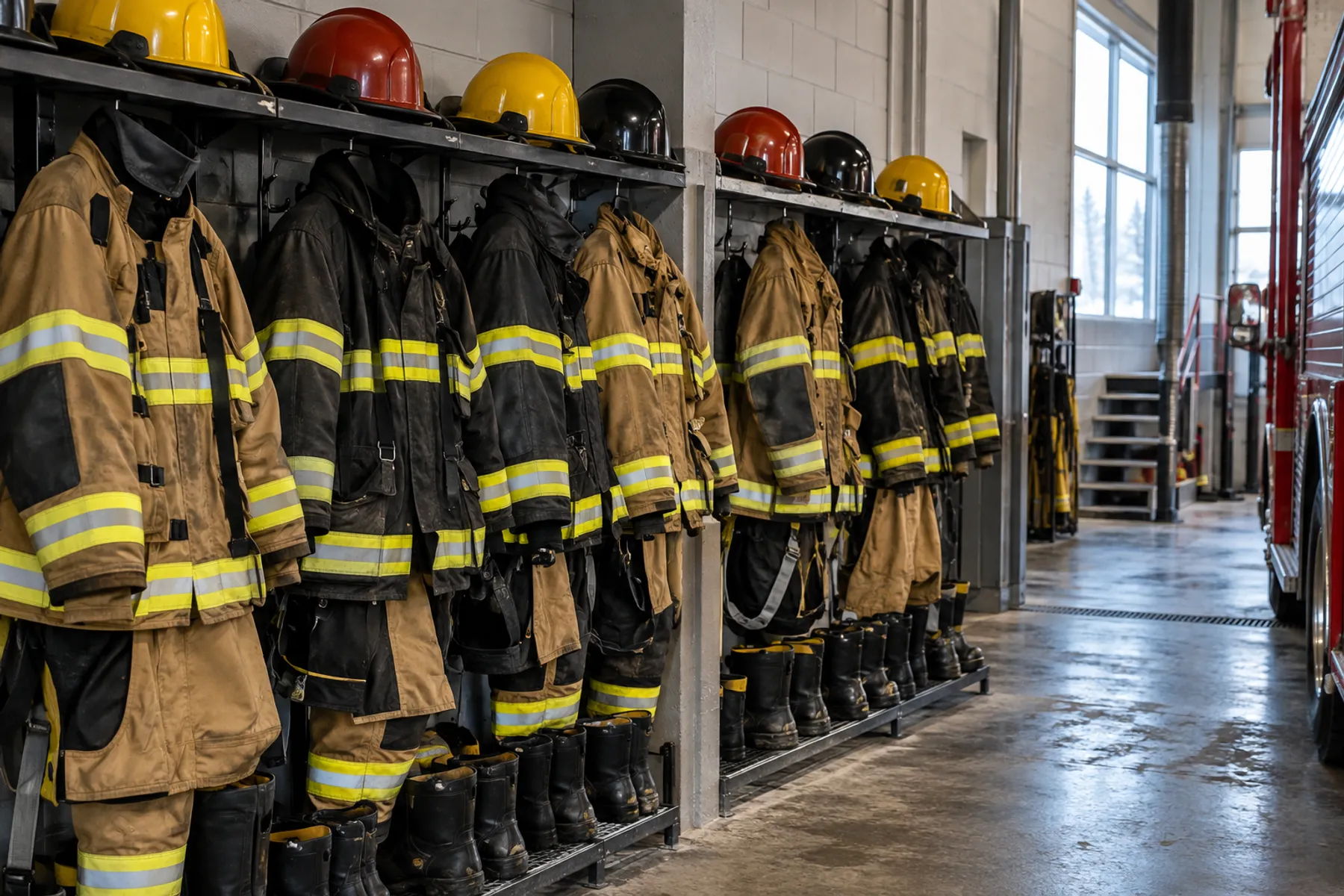
Protective clothing can carry combustion residues. It is best to locate the gym away from the area where turnout gear is stored and to train in workout clothes.
Non-porous surfaces, accessible disinfectant products and good ventilation help maintain a healthy environment for every shift.
The kinesiologist's role in designing the gym
Before choosing machines, it can be wise to call on a kinesiologist who will assess the station's real needs, the members' profiles and the most demanding tasks, then guide the equipment selection accordingly.
The kinesiologist can also propose programs adapted to shift work, for example short sessions that can be completed between two calls, and a safe progression for members returning to training after an injury.
Financing and procedures for municipalities
In most cases, the project falls under a municipal budget. Depending on the amount, it may have to follow the rules for awarding municipal contracts, which is why it is important to consult the procurement department early.
Two levers help meet budget constraints. The first is a phased build-out, which makes it possible to start with priority equipment and complete the room over successive annual budgets. The second is leasing, which spreads the cost over fixed monthly payments.
The article on leasing or buying gym equipment compares these two approaches. For an overview of public projects, the page on institutional gyms also covers schools, municipalities and organizations.
A well-equipped fire station gym that stands the test of time
A successful fire station gym replicates the demands of the field, withstands intensive use and remains accessible during shifts. To get there, the equipment must combine functional strength, cardio, task simulation and recovery, in a layout designed around the station's actual floor area.
Before launching the project, document the room's dimensions, the number of members per shift and the most demanding tasks. This information forms the basis for an accurate design and a realistic budget.
Ready to give your fire station a training room that matches the demands of emergency calls? Get a free quote and a plan tailored to your space.