
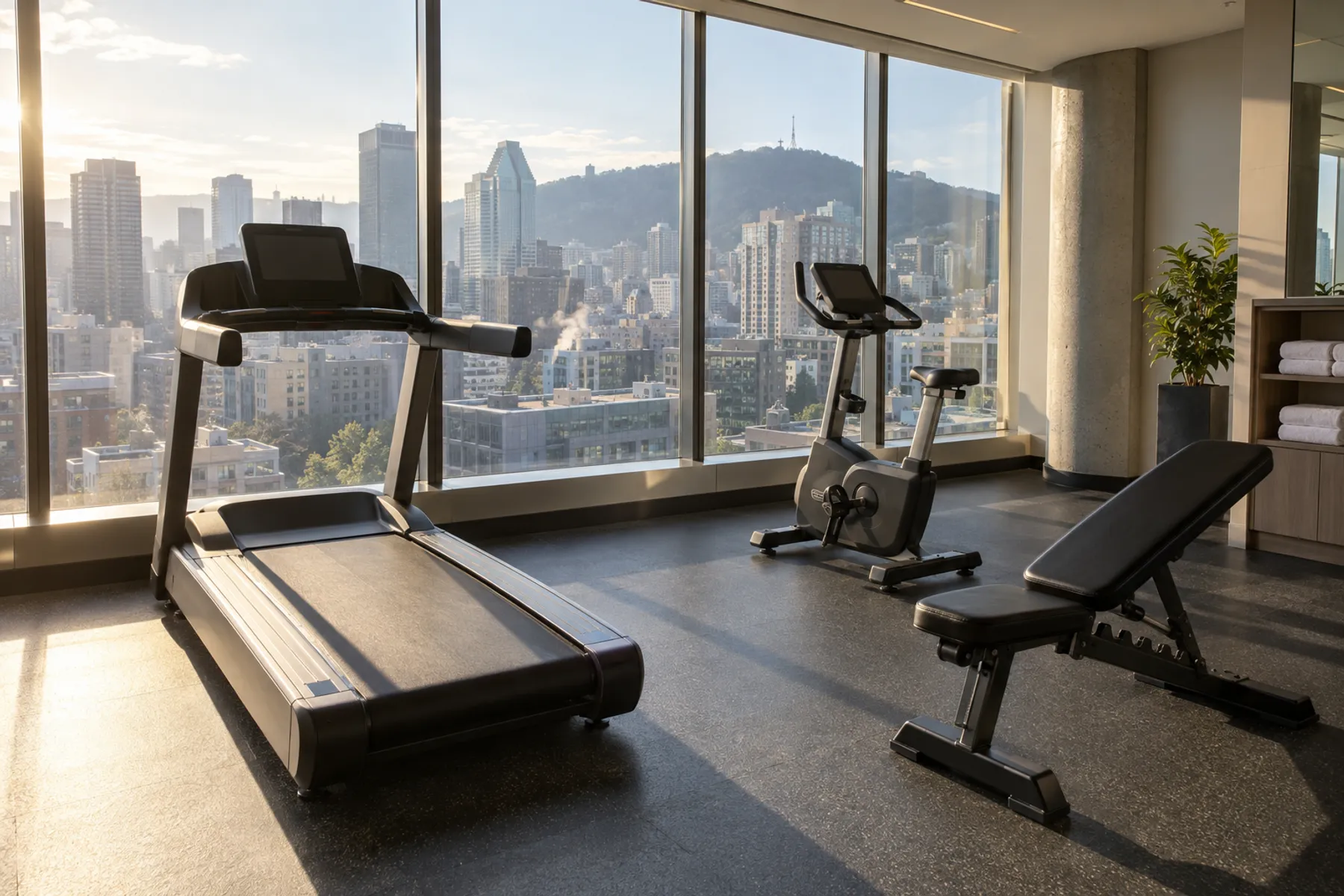
On most booking platforms, a simple filter lets travellers rule out properties without a fitness room. Getting hotel gym design right is therefore a concrete business issue that influences booking rates, online reviews and business-traveller loyalty.
The problem is that intent does not always translate into use. A Cornell University study conducted in 33 hotels and reported by Travel Weekly found that 46% of guests planned to work out during their stay, but only 22% actually did.
In other words, a poorly planned room stays empty, even if it is featured prominently in the hotel's listing. This guide covers what travellers look for, which equipment to prioritize, how much space to plan, flooring, maintenance and financing, so you can design a space your guests will adopt and enjoy.
Why a well-designed hotel gym influences travellers' choices
Wellness tourism is growing fast. According to the Global Wellness Institute, the sector grew by 13.8% between 2023 and 2024, one of the strongest increases in the wellness economy.
For a hotel, this means a growing share of guests want to keep up their training habits on the road. Not all travellers have the same expectations, however, and understanding the different profiles helps you choose both the equipment and the layout.
Business travellers want efficiency
Business travellers often work out early in the morning or late in the evening, between meetings. They want a short session with no waiting. They want an available treadmill, a few dumbbells and a bench, without having to figure out how a complex machine works.
Wellness travellers are looking for an experience
For them, the fitness room is part of the stay. Natural light, cleanliness, recent equipment and a stretching corner weigh directly on the review they will leave online.
Sports teams and extended stays
Properties that host tournaments, teams or workers on extended assignments see their fitness room used more intensively. A versatile strength station and heavier free weights then become relevant.
Essential equipment for a hotel fitness room
In a hotel, equipment must be intuitive, sturdy and safe for users who train without supervision. The ISO 20957-1 standard, which governs the safety of stationary training equipment, classifies hotels as professional-use settings, as opposed to domestic use.
Here is a baseline that meets the needs of most guest profiles:
- Cardio: one or two commercial treadmills, complemented by an exercise bike or an elliptical depending on the space.
- Strength: a set of hex dumbbells, for example from 5 to 50 lb, an adjustable multi-angle bench and a dumbbell rack.
- Cable station: an adjustable dual-pulley machine, often called a functional trainer, allows many exercises in a small footprint with a limited risk of injury.
- Floor zone: exercise mats and a few accessories for stretching and core work.
- Amenities: water dispenser, towels, disinfectant wipes and posted safety instructions.
Connected consoles also deserve consideration. On several commercial treadmill models, the console lets users follow programs, stream content or pair a phone via Bluetooth, bringing the experience closer to that of a commercial gym.
To dig deeper into durability, warranty and service criteria, the guide how to choose commercial gym equipment details the points to check before you buy.
Planning a fitness room in your property? An analysis of the space and your guests helps target the right equipment before committing the budget. Request a free quote.
How much space to plan for a hotel gym
The available floor area dictates the configuration. An effective fitness room can easily fit in a modest space, such as a former guest room or an underused meeting room. Layout, equipment selection and safety clearances often matter more than the number of square feet.
| Floor area | Suggested configuration | Hotel profile |
|---|---|---|
| Under 500 sq. ft. | 1 treadmill, compact cable station, light to medium dumbbells | Inn, small hotel, boutique hotel |
| 500 to 750 sq. ft. | 2 cardio machines, cable station, bench, dumbbells, stretching zone | Urban hotel, business clientele |
| 750 to 1,000 sq. ft. | 3 or 4 cardio machines, dual-pulley station, dumbbells up to 50 lb, multi-angle benches | Convention hotel, extended stays |
| Over 1,000 sq. ft. | Separate zones for cardio, selectorized strength, free weights and functional training | Resort, sports teams |
These benchmarks are only a guide. Ceiling height, the location of electrical outlets, columns and doors directly affect how many machines can be installed.
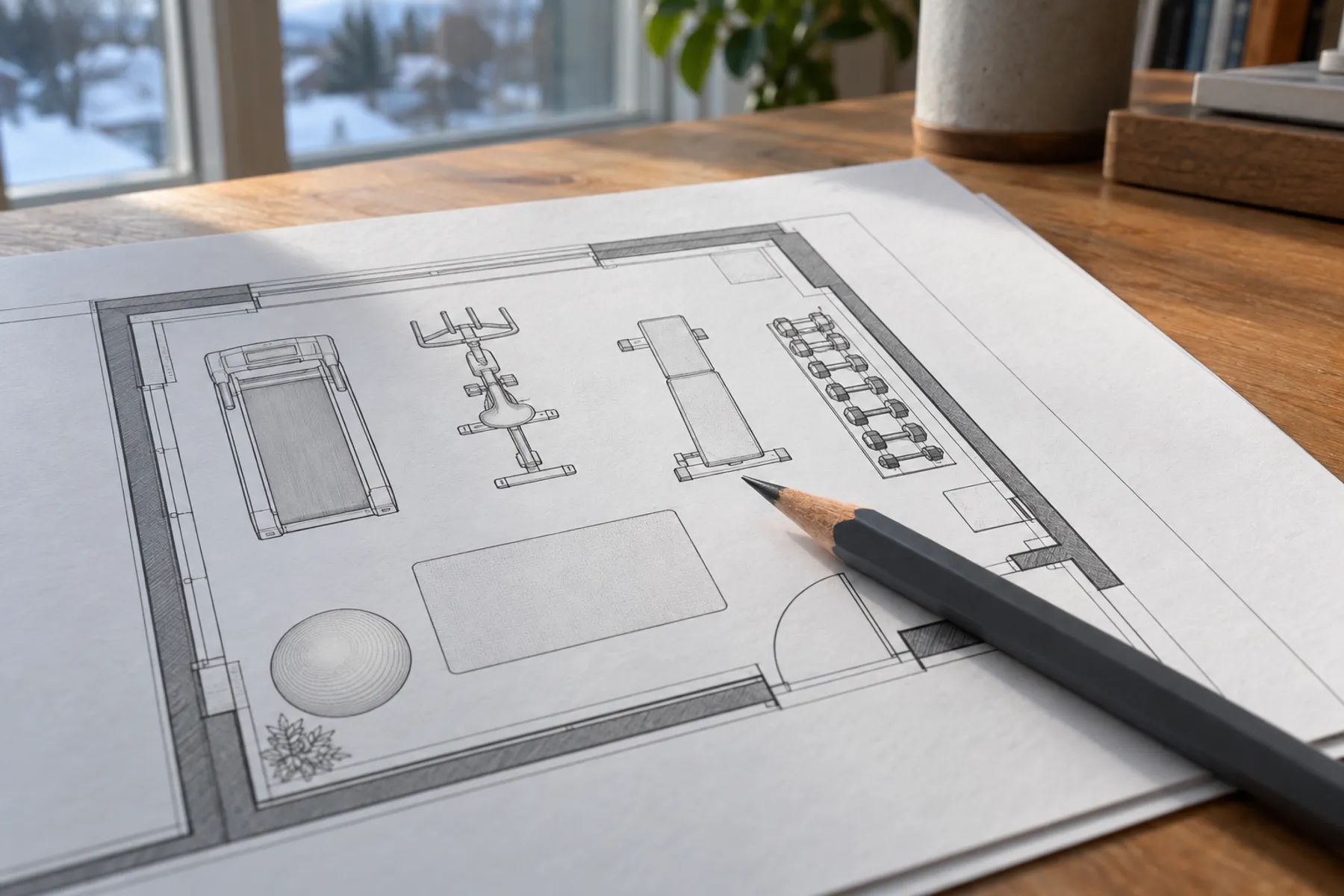
This is where a 2D floor plan becomes useful. It lets you validate traffic flow and clearances before delivery, and avoid costly repositioning once the equipment is on site.
Flooring, soundproofing and location in the building
The location of the fitness room has a direct effect on other guests' comfort. A room located above guest rooms, a restaurant or a conference room calls for particular attention to impact noise and vibration.
For the cardio zone, a hard-wearing, easy-to-clean surface is generally enough. In the free weight zone, thick, high-density shock-absorbing flooring protects the slab and limits impact transmission. When the room is next to sensitive spaces, an acoustic underlay is added beneath the flooring.
Soundproofing is often underestimated at the planning stage. The page on shock-absorbing gym flooring and soundproofing presents the options based on intensity of use.
Ground floor or upper floor
The ground floor makes delivering heavy equipment easier and reduces noise issues. On an upper floor, you need to check elevator access and door frame dimensions and, if needed, have a professional confirm the floor's load-bearing capacity.
Ventilation and light matter too. A windowless, poorly ventilated or overheated room discourages guests, no matter how good the equipment is.
Creating an experience that brings guests back
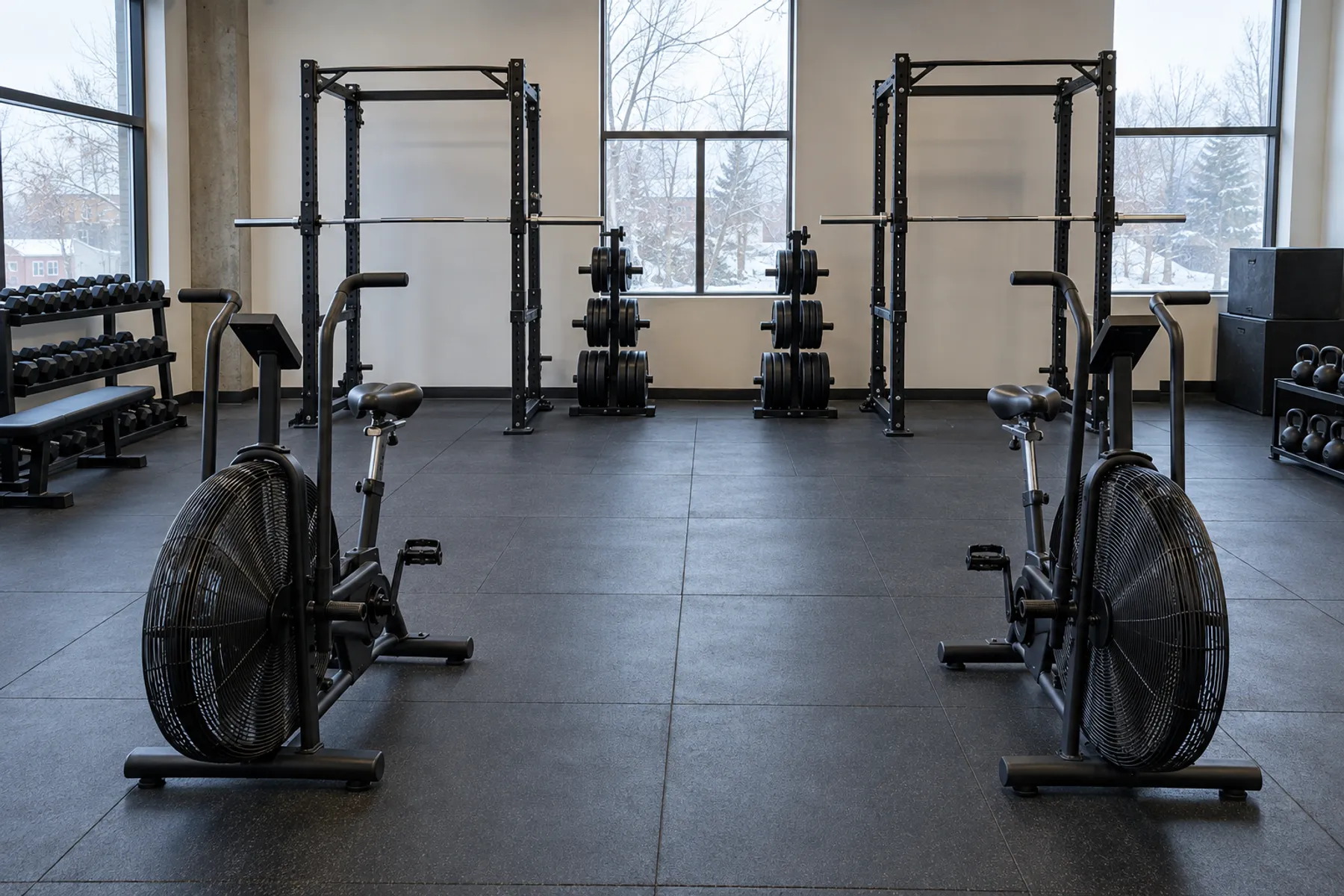
A well-equipped fitness room is not enough if guests do not know it exists or hesitate to use it. A few details make the difference between an empty room and a valued amenity.
Access and visibility
Round-the-clock key card access suits business travellers' irregular schedules. The room should also be mentioned at check-in, in the guest room and on the hotel's website, with recent photos.
Cleanliness and preventive maintenance
Cleanliness is often the first thing guests assess. Accessible wipes, a posted cleaning schedule and out-of-order equipment repaired quickly protect the property's reputation.
A preventive maintenance plan, with regular inspections of cables, pulleys and running surfaces, extends equipment life and reduces breakdowns in peak season.
Guidance for training solo
Signs with QR codes linking to simple workouts, such as a 20-minute circuit, help less experienced guests make the most of the room without staff on site.
Hotel gym budget and financing
The cost of a project varies with floor area, number of machines, flooring type and the level of console technology. Rather than aiming for an arbitrary amount, it is more accurate to build the budget around expected traffic and the hotel's positioning.
Three approaches are common:
- Cash purchase, for properties with available liquidity that want to own the equipment.
- Leasing, which spreads the cost over fixed monthly payments and preserves working capital. Its tax treatment should be confirmed with an accountant.
- Equipment rental, a monthly formula for a compact room, handy for gauging guest interest before investing further.
The article lease or buy gym equipment compares these options in detail. For a small space, some gym rental packages bundle the basic equipment into a monthly plan.
A well-planned hotel gym that wins over travellers
Successful hotel gym design rests on simple logic: understand who your guests are, choose intuitive and durable commercial equipment, plan the space before buying and keep up with maintenance. A modest but clean, well-located and well-equipped room is often better than a large, poorly planned space.
Before ordering a single machine, document the floor area, the building's constraints and your guest profiles. This information speeds up design and limits unpleasant surprises at delivery.
Ready to turn an underused space into an asset for your hotel? Get a free quote and a complete analysis of your project.